Rant blog
You think you hate Google enough...
But you don't! Google has tied its next-generation reCAPTCHA system to Google Play Services (GPS) on Android. If you’re running GrapheneOS or any other de-Googled ROM without GPS, you’ll automatically fail verification when the system decides to challenge you - not just see more puzzles, but be completely locked out.
reCAPTCHA becomes reCRAPTCHA
How the new system works:
- When reCAPTCHA suspects 'suspicious activity', (eg VPN usage) it abandons the traditional checkbox/image puzzles
- Instead, it presents a QR code that you must scan with your phone to prove you’re human
- On Android, this requires Google Play Services version 25.41.30+
- On iOS 16.4+, the same verification works without installing anything extra
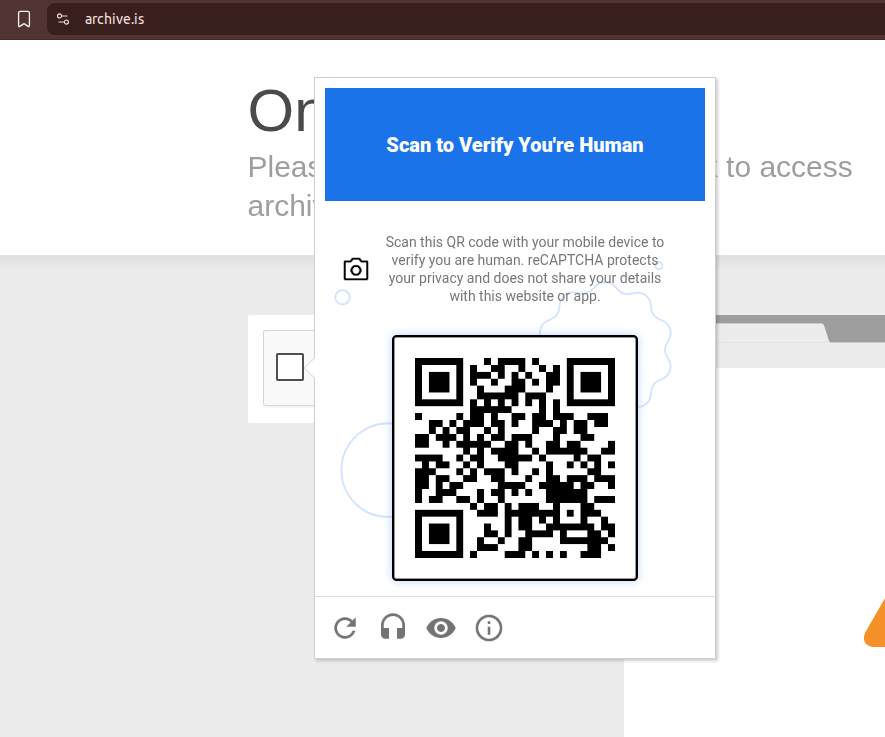
Can you fake being an iPhone on GrapheneOS?
Short answer: Probably not reliably. Here’s why:
reCAPTCHA doesn’t just check your user agent string. As noted in security research on this topic, Google cross-verifies JavaScript behaviour, DOM internals, and other browser characteristics. To successfully spoof an iPhone, you’d need to:
- Change the user agent
- Modify JavaScript engine behavior to match WebKit/Safari
- Adjust DOM properties to match iOS
- Potentially handle hardware attestation signals
Unless you’re essentially running Safari/WebKit (which you can’t on Android), reCAPTCHA can detect the mismatch between what you claim to be and how your browser actually behaves.
Better alternatives for GrapheneOS users:
- Use a secondary device with Play Services when you hit a reCAPTCHA challenge
- Set up a separate Profile on GrapheneOS that has GPS running in - swap into that profile when needed
- Avoid sites using the new reCAPTCHA v3/Enterprise (though this is hard to detect)
- Use a different browser with different fingerprinting characteristics (some users report Firefox Focus or Tor Browser sometimes getting different treatment)
- Contact site administrators and ask them to use alternative CAPTCHA solutions like hCaptcha or Cloudflare Turnstile
This has been quietly in place for about seven months and represents a hard dependency that makes de-Googled phones second-class citizens on the web.